- Jan 3
I Don’t Use ChatGPT Like Most People Do
- Mondi Gale
- Orientation
Recently, ChatGPT provided a “Your year with ChatGPT” overview for me, and it described my apparent archetype: Strategist.
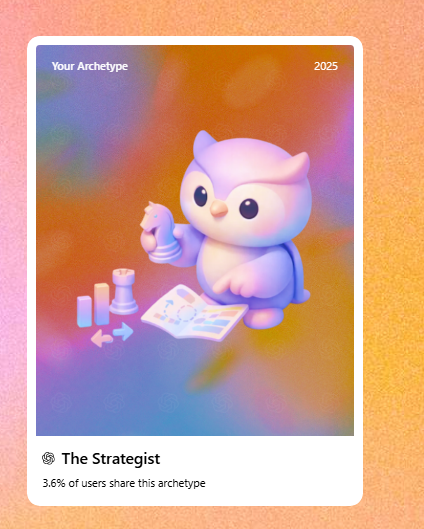
It told me that only 3.6% of users engage with it this way. That number caught my attention. Not because it felt exclusive, but because it named something I’ve now recognized that I do instinctively, long before AI even entered the picture. I don’t use technology to provide answers. I use it to provide clarity.
A Boundary That Changed Everything
Here’s the line that matters most to me, the one I do not cross: When I type a question into ChatGPT, I don’t hand it authority. I bring my values, my faith, my context, and my thoughts, and I ask it to help me see the pattern. That boundary shapes everything. I don’t outsource discernment. I don’t replace prayer, reflection, or wisdom. I don’t ask a tool to tell me who I am or what matters. I use it to slow things down enough to see what matters for me.
Most People Ask for Outputs
The most common way people use ChatGPT is transactional:
Write this.
Fix that.
Give me ideas.
Summarize this.
There’s nothing wrong with that, but it treats AI like a vending machine. I treat it more like a thinking partner. I don’t ask: “What should I do?”
I ask:
“How do these pieces fit together?”
“What am I missing?”
"Ask me questions to help understand the pattern that is emerging?
“What’s the underlying structure here?”
“If this were simple, what would it look like?”
I use it to map, not to rush. Being a strategist doesn’t mean being the smartest person in the room. It means being the one willing to slow the room down enough to see clearly. I have discovered that I use ChatGPT to untangle complexity, pressure-test decisions, surface assumptions, turn intuition into structure, translate overwhelm into sequence, and guide my thousand ideas and thoughts.
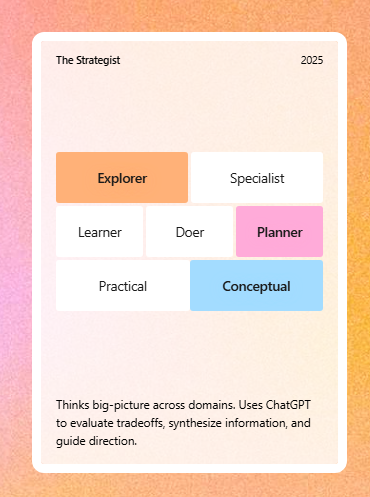
It helps me see the shape of things. That’s true whether I’m designing systems for work, building playbooks for life, writing, planning a transition, or simply trying to name what feels “off”.
Vision Board Year → Freedom Year
This year is a Vision Board Year for me. Not in a “manifest everything instantly” way, but in a grounded, intentional one. It’s the year where I align my time, systems, finances, and energy with where I’m headed next. Freedom Year begins in late 2026. And freedom, for me, isn’t chaos or escape, it’s structure that supports the life I’m called to live. I am using AI to help me:
break long-range goals into faithful next steps
test whether plans align with my values
identify where effort is misdirected
design systems that reduce noise, not add to it
Not by telling me what to do, but by helping me see what’s already there.
I Don’t Outsource My Thinking. I Strengthen It.
This is the part that matters most. I’m not using AI to think for me. I’m using it to think with me. I still decide. I still discern. I still carry responsibility for what I build. But instead of thinking in isolation, I think in dialogue. That’s not automation. That’s amplification.
Why the 3% Makes Sense
Most people want faster answers. Strategists want better questions. That alone changes how the tool gets used. When you approach ChatGPT with intention instead of urgency, curiosity instead of consumption, structure instead of chaos it responds differently. Not because it’s wiser, but because you are being more precise.
This Is How I Build Everything
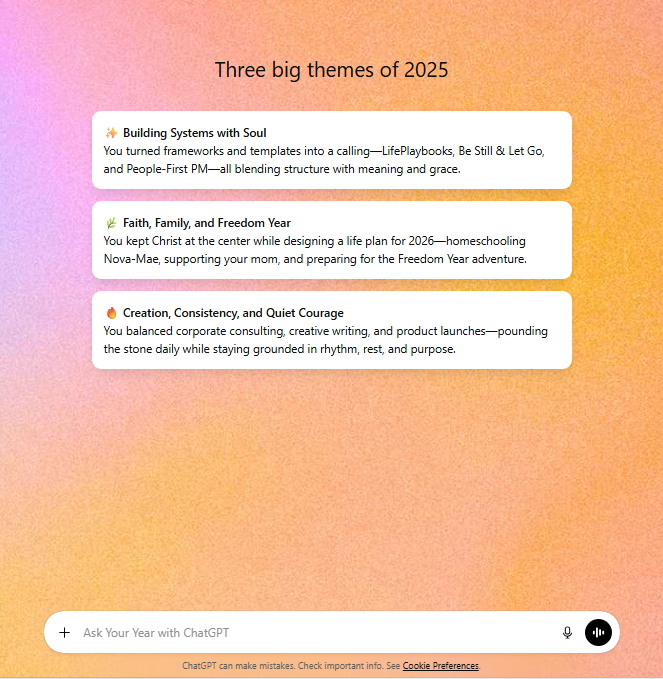
The systems I create. The work I do. The way I plan my life. None of it is about doing more. It’s about doing what matters on purpose. AI just happens to be one of the tools that helps me do that, quietly, thoughtfully, without noise.
And honestly?
If only 3% of people are using it this way, that tells me less about the tool and more about how rare it still is to slow down and think strategically in a world obsessed with speed.
Tools don’t change lives.
How you use them does.
The difference isn’t whether you use AI. It’s whether you remain anchored while you do. As I step into a new year, one marked by vision, self-discipline, and long-range faith, I’m less interested in moving faster and more committed to seeing clearly. Because freedom isn’t found in doing more. It’s built, quietly, through structure, discernment, and the courage to slow down and recognize what truly matters.
Oh, and apparently ChatGPT thinks I make spreadsheets sound poetic... If I can do that, then anything is possible!
